
One of the most common concerns for travellers, especially when moving from location to location on a regular basis is always what to pack and actually more importantly, what not to pack. While there is no definitive right or wrong way to pack for your own personal needs, a few hints are always welcome. Here are my top 10 less obvious packing tips for travellers that I wish I’d known years ago!
Is packing efficiently that important?
A definite yes! One thing guaranteed to turn any adventure into a chore, is to be constantly carrying around an oversized, overweight backpack or suitcase or not have that one thing to hand that would make your day just that little bit easier.
- Bulky bags and packs make travelling sweaty and uncomfortable.
- Large bags/cases can cause injury.
- They’re often impossible to fit in allocated luggage space.
- You stand out from the crowd as a ‘tourist’.
- You can’t keep up with others and need to take constant rests.
- Cumbersome bags are a nuisance and hazard to other people.
Pack smarter, not bigger.
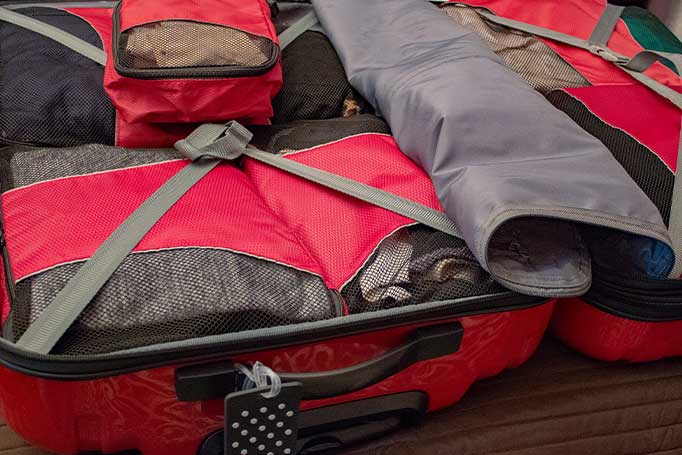
Use packing cubes
There’s a reason that this is No.1 on my list. When I first started travelling I couldn’t understand why anyone would want to use packing cubes. Didn’t they just add weight and bulk which is exactly what I wanted to avoid? On the contrary, cubes allow you to compartmentalise and organise. Each time you open your main bag, you’re able to immediately find anything without disturbing everything else.
Buy locally and leave the rest at home
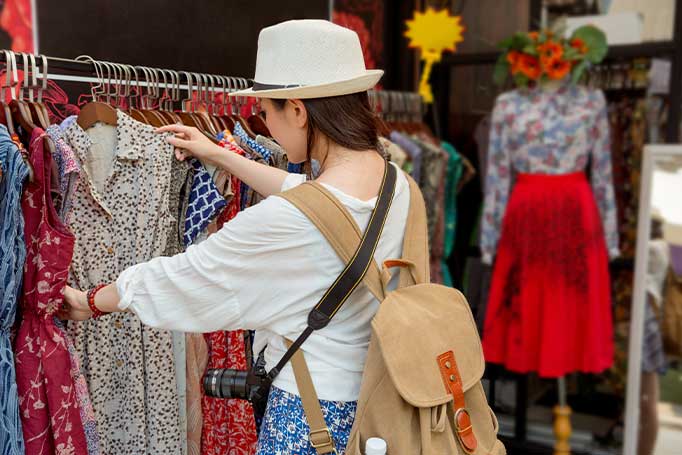
Probably the most common mistake most people make is trying to pack for every possible eventuality and climatic circumstance. This results in carting around needless clothes, footwear and gadgets which may only be used once or so, if at all. Wherever you travel to, from Thailand to Peru, the local shops and markets will sell suitable items for the time of year. They are often much cheaper than you would pay at home too. Also make use of second-hand stalls and shops where fellow travellers have sold or donated their own used gear before moving on or returning home.
Bonus tip: Don’t waste your money buying expensive brand name insect sprays at home. Local brands are almost always cheaper and made specifically for insects in that region.
Stay fit without breaking your back
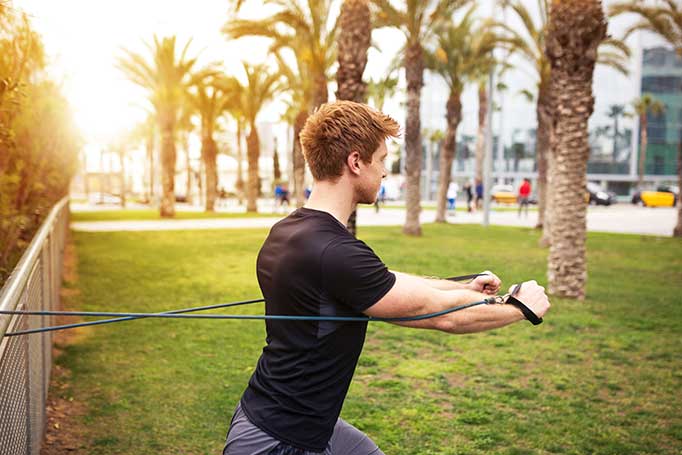
This is one of our less obvious packing tips for the gym bunnies out there. It’s important to stay fit and flexible while traveling but most gyms require memberships which are impractical for most travellers. Before leaving home consider buying either a set of resistant exercise bands which are both cost and space efficient and/or suspension training straps. The latter can range in price from less than £20 to almost £200. You could also try making your own like I did. Not only did these cost only a few pounds and about an hour to make, they work just as well. They are also incredibly light and so small that they even fit in a pocket.
Pack a standard pillow case
Pillow cases are so multifunctional and useful which is why this has made it into the less obvious packing tips. In addition to the obvious use of adding a secondary cover to any unappealing overnight train or bus pillow, they can also be used as makeshift shopping bags, a stuff sack, laundry bags, a travel pillow (stuff with some soft clothing), a small tablecloth, a food cover, a mini curtain, an emergency cloth/towel, a packing layer separator, as a delicates bag for use in a laundrette or as a bandage, sling or wound dressing.
Fix it, don’t replace it
During my years of constant travelling, unpacking and packing every day or so, I can’t recall once experiencing anything that I owned that couldn’t be effectively fixed or at least bodged with one of the following – Duct tape (cloth tape), zip-ties (varying sizes), Binder clips (a.k.a. Bulldog clips) and of course a small sewing kit. Duct tape can fix bags, clothes, spectacles, computer casings cables and even act as makeshift wound dressings in an emergency. Zip ties can fix zips, clothing tears, bags and act as makeshift handles. In addition to keeping documents, papers or money organised and small bags closed, binder clips are great for keeping curtains closed on buses, trains and in hotels.
The ability to seal curtains against bright light and/or heat is one of the best hacks I’ve ever used. When curtains on a bus aren’t available, add the previously mentioned pillow case to either your binder clips or duct tape and you’re good to go.
Bonus tip: To save even more space remove some duct tape from its original spool and rewrap it around your goto travelling pen. You don’t need the full roll and this will mean it’s always on hand and not taking up unnecessary space.
Bonus tip 2: In a similar vein, remove the centre roll from an average toilet roll and keep on you at all times when travelling. By removing the cardboard roll, the tissue takes up almost no space and can be kept in a small pocket or bag.
Two SIM’s are better than one
If your phone of choice doesn’t have twin/dual SIMs then consider buying a cheap one that does. This way you can leave your home SIM in place (activate roaming before you leave and turn off mobile data) so that your family and friends can SMS you without paying any international fees, while also using a local SIM card for internet data and keeping in touch with all the new friends you’ll be meeting.
Note: I recommend always obtaining a local SIM when available, if for no other reason than being able to call for help in case of uncertainty, emergency or danger.
Phone holders aren’t just for cars
After spending many hours on buses, trains, boats and planes holding and shuffling my phone while either reading books or watching videos, it soon began to take its toll on my poor hands and wrists. That’s when I bought a small cheap car phone holder with a suction connection. This can be easily stuck to any window to take the strain out your mobile viewing experience. One of our less obvious packing tips if you plan on spending many hours on transport between your destinations.
Free trials are your friend
You’re probably going to be spending a lot of time on those aforementioned buses, trains, boats and planes. After the initial thrill of the scenery has worn off, or if travelling at night, you might need entertainment. Plan ahead and the day before you leave home, simply apply for free trials of Netflix, Amazon Prime, Audible. Spotify and YouTube music, Better still, if you’re travelling for some time, then stagger them so that you only apply for your Amazon Prime trial once your Netflix trial expires or your YouTube music trail once the Spotify trial has ended etc. Voila, free, unlimited, legal entertainment and/or education for up to 3 months.
Bonus tip – Where available some entertainment services are much cheaper to buy locally. e.g. Netflix’s cheapest price in the UK is £5.00 ($7.95), in the US it’s $8.99. In Thailand it’s only 99 baht (£2.45 or $3.25) – Bargain! The same is true of Spotify where a Premium Thai account is only 129 baht (£3.20 or $4.25) per month with English language as an option.

A bulb over your head actually is a good idea
Get a headlight. Not only do they allow you to search deep inside your bag on a dark train or bus leaving both hands free, but you also have a hands free torch for reading books or magazines on a dark bus or train. However, my most useful use for a head torch is reading (real books or magazines) in bed in hotel rooms. Most cheaper hotels do not have a light switch next to the bed itself, meaning that just as you’re about to nod off, you have to get out of bed, turn the light off at the door and then return to bed traversing an unfamiliar room with many toe stubbing obstacles to make things interesting, only to find that by the time you get back in to bed, you’re wide awake again.
Where’s your bin?
Finally, for our less obvious packing tips, pack a couple of strong bin bags. These can range from full 40cm bags designed for outside bins to smaller bags designed for indoor bins. These are primarily useful for keeping everything you value dry when travelling in the rain. Entire backpacks can be placed inside larger bin bags while smaller bags can be used inside to keep items doubly safe.
Of course strong bin bags are also useful when travelling by open boats where spray might enter a bag and weirdly enough when placing bags in the luggage storage underneath older local buses. Why use on a bus I hear you ask – This became one of my personal rules after the one time in Cambodia when the bus toilet leaked all over my poor back and into all my clothes inside. Believe me my bag was never left anywhere near a toilet after that without some sort of protection.
Bonus tip – For the totally budget conscious, a well thought out range of industrial strength bin bags can take the place of packing cubes to keep everything organised whilst ensuring the bags are multi-use.
I really hope that at least one or two things on this list of less obvious packing tips helped out or got you thinking. If you are after further travel inspiration, head over to Tucan Travel and browse more exciting destinations.
